
This article contains affiliate links. As an Amazon Associate I earn from qualifying purchases.
Printable caregiver resource
A safer kitchen does not require turning a parent’s home into a clinic. Small changes – a clearer walking route, easier-to-reach cookware, readable controls, working alarms, and a realistic cooking routine – can reduce avoidable hazards while supporting independence. Use these 30 checks with the older adult, not simply for them.
Download the printable checklist
Print it, walk through the kitchen together, and mark each item as complete, needs attention, or not applicable.
How to use this checklist
- Choose a calm time and review the kitchen in normal daytime and nighttime lighting.
- Ask the older adult which tasks feel tiring, painful, confusing, or unsafe.
- Fix quick hazards first, then list repairs that need family or professional help.
- Do not remove independence unnecessarily; match support to the person’s actual abilities.
- Repeat the review after a fall, health change, hospital stay, or new mobility aid.
Clear Paths and Prevent Falls
-
1. Remove loose rugs and floor clutter
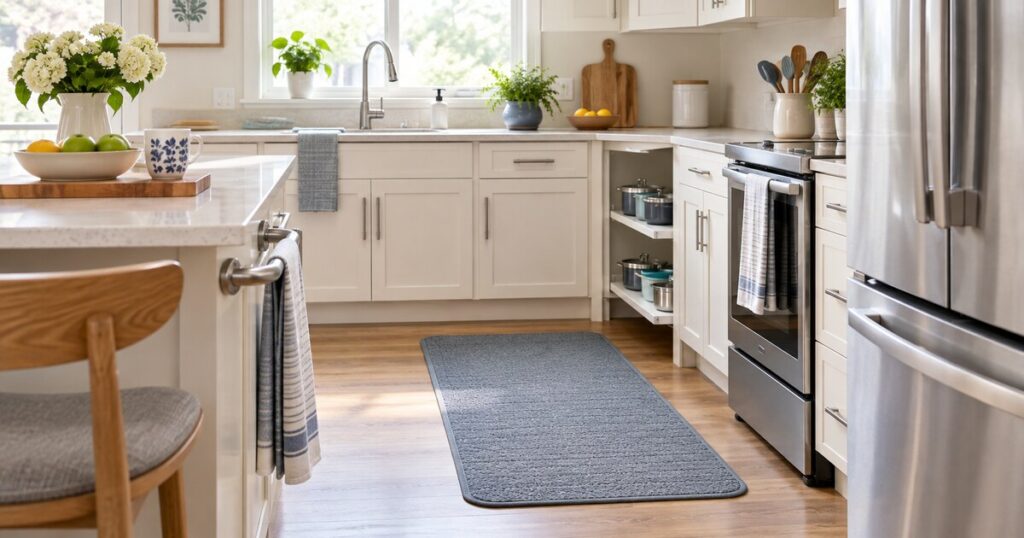
Clear throw rugs, bags, boxes, pet items, and other trip hazards from kitchen routes. If a mat is necessary, use a low-profile mat with a secure nonslip backing and check that its edges lie flat.
-
2. Route cords away from walking areas
Keep appliance and extension cords out of traffic paths. Never run cords under rugs or where feet, walkers, or chair legs can damage them.
-
3. Clean spills immediately
Keep paper towels or an absorbent cloth within easy reach. Clean water, oil, and dropped food as soon as they appear, and use a visible sign or barrier until the floor is dry.
-
4. Keep the main work triangle unobstructed
Walk the route between the refrigerator, sink, stove, and dining area. Move stools, trash cans, and small furniture that narrow the path or require awkward turns.
-
5. Provide a stable place to sit
Use a sturdy chair or perching stool for food preparation if standing causes fatigue or unsteadiness. It should not roll, wobble, or block the exit.
Improve Lighting, Reach, and Everyday Access
-
6. Brighten work surfaces and routes
Make sure the entrance, sink, counters, stove, and floor are evenly lit. Replace failed bulbs promptly and reduce glare that makes wet spots or edges harder to see.
-
7. Make switches easy to find
Place switches near entrances and use high-contrast labels or illuminated switches where helpful. Add motion-activated lighting for nighttime trips, but keep a reliable manual switch.
-
8. Store daily items between waist and shoulder height
Move frequently used dishes, pans, and ingredients out of very high or low cabinets. Avoid climbing on chairs or reaching over hot surfaces.
-
9. Reduce lifting and carrying
Use smaller containers, lightweight cookware, and a cart or tray when appropriate. Keep heavy appliances on a stable counter instead of moving them for every use.
-
10. Improve labels and control visibility
Use large, high-contrast labels for frequently used controls and containers. Confirm that markings remain readable in normal kitchen lighting and do not cover safety warnings.
Reduce Burns and Cooking Fires
-
11. Stay in the kitchen while high-heat cooking
Remain nearby when frying, boiling, grilling, or broiling. If you must leave, turn the burner off. Use a loud timer as a reminder, not as a substitute for supervision.
-
12. Turn pot handles inward
Position handles toward the back or side so they cannot be bumped, caught by clothing, or pulled over the edge. Keep handles away from adjacent hot burners.
-
13. Keep combustibles away from the stove
Move towels, paper, packaging, wooden utensils, curtains, and loose clothing away from burners and hot appliances.
-
14. Keep a lid or baking sheet nearby
For a small pan fire, slide a lid or baking sheet over the pan and turn off the heat if it is safe to do so. Do not move the pan, and never put water on a grease fire. Leave immediately and call emergency services if the fire is not controlled.
-
15. Consider automatic shutoff support
If memory, attention, or medication side effects make unattended cooking possible, discuss stove shutoff devices or safer meal routines with the older adult, family, and an appropriate professional. Technology does not replace supervision when supervision is needed.
Check Appliances and Electrical Safety
-
16. Inspect plugs and cords
Stop using appliances with frayed insulation, cracked plugs, exposed wires, scorch marks, or loose connections. Arrange repair or replacement rather than taping over damage.
-
17. Plug major appliances directly into wall outlets
Do not power refrigerators, stoves, or other major appliances through extension cords or overloaded power strips. Follow the manufacturer's installation instructions.
-
18. Confirm kitchen outlets have GFCI protection
Ask a qualified electrician to check whether countertop outlets and outlets near water have appropriate ground-fault protection, especially in an older home.
-
19. Keep appliances and hands dry
Unplug countertop appliances before cleaning when instructed, keep cords and plugs away from water, and never handle electrical equipment with wet hands.
-
20. Choose controls the user can operate reliably
Check that buttons, knobs, displays, sounds, and required steps match the person's grip, vision, hearing, and memory. Avoid adding a complicated device merely because it is marketed as smart.
Protect Food and Prevent Scalds
-
21. Verify refrigerator and freezer temperatures
Use appliance thermometers. Keep the refrigerator at 40°F (4°C) or below and the freezer at 0°F (-18°C). Check periodically rather than relying only on the control dial.
-
22. Separate raw and ready-to-eat foods
Keep raw meat, poultry, seafood, and eggs away from produce and cooked food. Use separate cutting boards or wash boards, utensils, and surfaces thoroughly between tasks.
-
23. Use a food thermometer
Check safe minimum internal temperatures instead of judging doneness by color or cooking time alone. Keep a current FoodSafety.gov temperature chart near the cooking area.
-
24. Refrigerate perishables promptly
Refrigerate or freeze perishable food within two hours, or within one hour when the surrounding temperature is above 90°F (32°C). Label leftovers with the date when memory is a concern.
-
25. Reduce tap-water scald risk
The National Institute on Aging advises setting the water heater to 120°F. Have a qualified person adjust it when needed, and test water before washing dishes or hands.
Prepare for Emergencies and Changing Needs
-
26. Test smoke and carbon monoxide alarms
Install alarms in the locations recommended by safety authorities and the manufacturer. Test them regularly, replace batteries and units as directed, and consider alerting devices if hearing is limited.
-
27. Keep exits clear
Make sure the path from the kitchen to an exit is free of furniture, stored items, cords, and locked obstacles. Everyone in the home should know the escape route.
-
28. Place emergency contacts where they are visible
Post local emergency numbers, the home address, family contacts, and relevant medical information near a phone. Keep a charged phone within reach while cooking.
-
29. Review medicines, vision, and balance concerns
If dizziness, drowsiness, low vision, weak grip, or balance problems affect kitchen tasks, discuss them with the relevant health professional. Adapt the task instead of relying on willpower.
-
30. Repeat this review after any meaningful change
Recheck the kitchen after a fall, hospital stay, new diagnosis, medication change, decline in vision or memory, or introduction of a mobility aid. A setup that worked last year may no longer be safe.
When to seek additional help
Ask a qualified electrician about damaged wiring, warm or sparking outlets, repeated breaker trips, missing GFCI protection, or major-appliance installation. Contact a health professional when dizziness, medication effects, vision, balance, grip, or memory changes interfere with safe cooking. If cognitive impairment creates a risk of leaving heat on, the safest plan may require supervision, a different meal routine, or restricting access to particular appliances.
Sources and further reading
This resource was prepared using guidance from U.S. government safety and healthy-aging agencies. Accessed September 4, 2026.
- U.S. Consumer Product Safety Commission – Older Adult Safety
- National Institute on Aging – Preventing Falls at Home: Room by Room
- National Institute on Aging – Alzheimer's Caregiving: Home Safety Tips
- CDC – Check for Safety: A Home Fall Prevention Checklist
- U.S. Fire Administration – Cooking Fire Safety
- FDA – Refrigerator Thermometers: Cold Facts about Food Safety
- FoodSafety.gov – Four Steps to Food Safety
Prepared by Easy Kitchen for Seniors to help older adults and caregivers make practical, dignity-preserving safety improvements at home.