
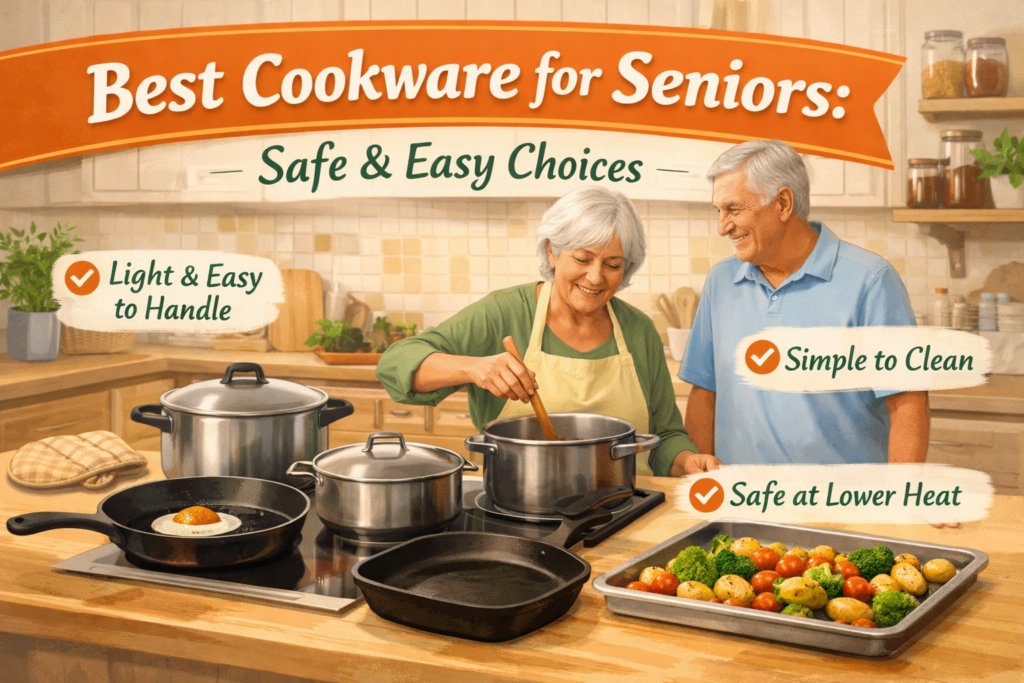
What’s the Best Material for Elderly-Friendly Cookware?
If you’re shopping for a parent (or you’re cooking for yourself and want things to feel simpler), one question comes up fast: what’s the material that’s safest and easiest to live with every day? For an elderly kitchen, cookware isn’t just about taste—it’s about safety, comfort, and confidence. Heavy pans can strain wrists. Slick handles can slip. Some coatings can be tricky to maintain, and others don’t heat evenly, which can lead to scorched food (and more scrubbing).
The good news: choosing the right cookware material can instantly make cooking easy to use again—especially for seniors with weaker grip strength, arthritis, or lower vision. In this guide, we’ll compare the most common cookware materials (like stainless steel, ceramic, cast iron, and modern nonstick) through a senior-friendly lens: heat control, weight, cleaning effort, handle comfort, and everyday durability. We’ll also cover simple “green flags” to look for (like stay-cool handles and balanced weight) and “red flags” to avoid.
By the end, you’ll know exactly which material fits your loved one’s cooking style—and how to pick cookware that feels safer, lighter, and genuinely more comfortable to use every day.
Quick Picks (Senior-Friendly Cookware Materials)
Top easy-to-use picks for a safer, lower-effort elderly kitchen.


📎Comparison Table: Best Material for Elderly-Friendly Cookware
| Product | Type | Key Features | Why | Buy it now | |
|---|---|---|---|---|---|
| Ceramic Nonstick Fry Pan (Lightweight) | Ceramic Nonstick | • Easy-release surface • Low-effort cleanup • Best on low–medium heat | Safest “daily driver” for seniors—less sticking means less scrubbing and less wrist strain. | ||
| Hard-Anodized Nonstick Skillet | Hard-Anodized Nonstick | • More durable nonstick • Even cooking for simple meals • Quick wipe-clean finish | Easy to use for everyday cooking; helps reduce mess and cleanup time in an elderly kitchen. | ||
| Tri-Ply Stainless Steel Saucepan | Stainless Steel (Tri-Ply) | • No coating to wear off • Stable simmering (soups/oatmeal) • Easy to sanitize | Great long-term “safe & durable” choice if your parent prefers no nonstick coating. | ||
| Stainless Steel Fry Pan | Stainless Steel | • Versatile for many foods • Tough surface (scratch-resistant) • Works well with simple technique | Safe and reliable: once heat is kept moderate, it’s straightforward and long-lasting. | ||
| Steel Bakeware Set (Sheet-Pan Meals) | Steel / Bakeware | • Great for one-pan oven meals • Easy to line with parchment • Less stirring & splatter | Perfect for seniors who want fewer steps—“set & check” cooking can feel safer and calmer. | ||
| Carbon Steel Pan | Carbon Steel / Steel | • Fast heating & responsive • Can become naturally nonstick • Great for quick meals | Good for seniors who want fast cooking; just needs simple care (dry + light oil). | ||
| Ceramic-Coated Cookware | Ceramic-Coated | • Smooth, easy-clean surface • Encourages lower-heat cooking • Gentle everyday use | Low-effort cleanup and calmer cooking—very senior-friendly when used on low–medium heat. |
Detailed Reviews: Senior-Friendly Cookware by Material
When you’re deciding what’s the material that makes cookware safer and truly easy to use in an elderly kitchen, focus on three things: weight (lifting and wrist strain), cleaning effort (scrubbing fatigue), and heat control (avoiding burns or scorched food). Below are seven practical picks—each one highlights a different cookware material and why it can be a smart, safer choice for older adults.
1) Ceramic Nonstick Fry Pan: The Low-Effort “Everyday” Option
Ceramic nonstick is often the easiest starting point for seniors because it reduces sticking without requiring high heat. That can make breakfast foods (eggs, pancakes) and quick lunches feel more safe and easy to use. In an elderly kitchen, “less sticking” usually means “less scraping,” which can be a big deal for sore wrists and weaker grip strength.
- Why seniors like it: Easier food release + faster cleanup = less time standing at the sink.
- Cooking tip: Use low-to-medium heat to keep cooking predictable and reduce the chance of scorching.
- Care tip: Use silicone/wood tools and avoid abrasive scrubbers to keep the surface smoother longer.
Pros
- Very low sticking for everyday foods
- Quick cleanup (often wipe + rinse)
- Great for gentle cooking at lower heat
Cons
- Nonstick surfaces can wear over time if overheated
- Not ideal for aggressive searing
Best for: Seniors who want simple cooking with minimal scrubbing—especially for eggs, vegetables, and light proteins.
Alt-text suggestion: “what’s the material ceramic nonstick pan safe easy to use elderly kitchen”
Customer Use Story: “My mom stopped cooking eggs because the pan always stuck and cleanup hurt her hands. Switching to a ceramic nonstick pan made breakfast feel doable again.” — Linda, Phoenix, AZ
2) Hard-Anodized Nonstick Skillet: Durable, Forgiving, and Senior-Friendly
Hard-anodized aluminum cookware is popular because it tends to heat evenly and handles daily cooking well. For older adults, the biggest benefit is confidence: food cooks more predictably, and cleanup stays low-effort. If you’re buying for a parent who cooks “normal meals” most days, this material often feels like the most practical upgrade.
- Why it’s safer: Even heating can reduce hot spots and unexpected sticking.
- Easy-to-use tip: Keep the heat moderate; let the pan preheat briefly so food releases more cleanly.
- Care tip: Hand-wash when possible to help the coating last longer.
Pros
- Good durability for daily use
- Nonstick convenience without constant scrubbing
- Often a nice balance of heat control and ease
Cons
- Still requires gentle utensils and non-abrasive cleaning
- Not the best choice for very high-heat searing
Best for: Seniors who cook frequently and want “reliable + easy cleanup” for most meals.
Alt-text suggestion: “what’s the material hard anodized nonstick skillet safe easy to use elderly kitchen”
3) Tri-Ply Stainless Steel Saucepan: A Long-Term, No-Coating Choice
If your priority is long-term durability with no nonstick coating to manage, tri-ply stainless steel is one of the best answers to what’s the material question. Tri-ply designs generally improve heat distribution, which helps with simmering soups, oatmeal, rice, and sauces—foods many seniors make often.
- Why it helps in an elderly kitchen: Stable simmering + easy sanitizing can feel safer and more dependable.
- Easy-to-use tip: Use a little oil/butter and lower heat; stainless steel rewards “patient cooking.”
- Care tip: For stuck bits, soak with warm water first—no heavy scrubbing needed.
Pros
- Very durable and resistant to scratches
- Great for soups, boiling, and gentle simmering
- Easy to keep clean and hygienic
Cons
- Can stick if heat control is too high or pan isn’t preheated properly
- Some stainless pieces can be heavier than expected
Best for: Seniors who want a dependable pot for soups, oatmeal, pasta, and daily simmering.
Alt-text suggestion: “what’s the material tri ply stainless saucepan safe easy to use elderly kitchen”
4) Stainless Steel Fry Pan: Great for Simple, Classic Cooking (With the Right Technique)

Stainless steel fry pans can be an excellent choice for seniors who prefer traditional cookware and don’t want to think about delicate coatings. The key is using a simple routine: preheat briefly, add a small amount of fat, and cook on moderate heat. Once that habit clicks, stainless can feel very safe and surprisingly easy to use.
- Why it can be senior-friendly: Tough surface, easy to sanitize, and doesn’t need “special rules” beyond heat control.
- Easy-to-use tip: If food sticks, lower the heat and wait—often it releases when properly browned.
- Care tip: A quick soak and gentle scrub usually solves most cleanup.
Pros
- Durable and long-lasting
- Works for many foods once technique is learned
- No coating to wear off
Cons
- Learning curve vs. nonstick
- Stuck-on food can happen if heat is too high
Best for: Seniors who want a “buy it once” pan and are okay with simple heat-control habits.
Alt-text suggestion: “what’s the material stainless steel fry pan safe easy to use elderly kitchen”
Customer Use Story: “My dad didn’t want nonstick anymore. We moved him to a stainless fry pan and taught him the ‘lower heat + a little oil’ trick. Now he cooks chicken and veggies with less frustration.” — Mark, Columbus, OH
5) Steel Bakeware Set: The “One-Pan Meal” Shortcut for Safer Cooking
Bakeware isn’t always the first thing people think about—but for many older adults, sheet-pan and oven meals can be the safest routine: fewer steps, fewer splatters, and less time hovering over a hot stove. If the goal is an easy to use workflow in an elderly kitchen, bakeware can be a quiet hero.
- Why it’s safer: Less stovetop mess + more “set it and check it” cooking.
- Easy-to-use tip: Line with parchment/foil to reduce scrubbing (especially helpful for sore hands).
- Care tip: Let pans cool before washing to avoid warping and make cleanup easier.
Pros
- Great for simple meals (vegetables, fish, chicken, roasted potatoes)
- Easy cleanup when lined
- Less stirring and lifting than stovetop pots
Cons
- Oven use requires safe lifting—recommend oven mitts with strong grip
- Some seniors prefer stovetop cooking habits
Best for: Seniors who want “one-pan meals” with fewer steps and lower cleanup effort.
Alt-text suggestion: “what’s the material steel bakeware safe easy to use elderly kitchen”
6) Carbon Steel Pan: Fast Heating, Lighter Feel (With Simple Maintenance)

Carbon steel is a favorite for quick heating and a smoother cooking surface once it’s seasoned. For seniors, it can be a smart compromise: it often feels lighter and more responsive than heavier cookware, but it does require basic upkeep. If your loved one enjoys cooking and is open to a simple routine, carbon steel can be both safe and efficient.
- Why it can be easy to use: Heats quickly and responds fast when you lower the heat.
- Simple routine: Dry after washing, then wipe with a tiny bit of oil to protect the surface.
- Senior tip: Keep cooking steps simple—avoid long acidic simmering (like tomato sauce) until fully seasoned.
Pros
- Quick heating and good control
- Can become naturally nonstick with seasoning
- Often a lighter feel than some heavy cookware options
Cons
- Needs simple maintenance (drying + light oil)
- Not “wash-and-forget” like some nonstick
Best for: Seniors who like cooking and want fast heating with a straightforward maintenance habit.
Alt-text suggestion: “what’s the material carbon steel pan safe easy to use elderly kitchen”
7) Ceramic-Coated Cookware: Gentle Cooking for Lower-Heat Habits

Ceramic-coated cookware can be a helpful middle path for seniors who want smoother cooking without heavy maintenance. It often encourages lower-to-medium heat habits, which can be safer for older adults—less smoke, fewer oil splatters, and more predictable cooking. If you’re still asking what’s the material that feels simplest day-to-day, this category is worth considering.
- Why it’s senior-friendly: Smooth surface + low-to-medium heat cooking = calmer kitchen experience.
- Easy-to-use tip: Preheat briefly, then cook gently—avoid blasting heat.
- Care tip: Soft sponge, mild soap, and a little soak time beats hard scrubbing.
Pros
- Low-effort cleanup
- Great for simple, gentle cooking
- Encourages safer, lower-heat habits
Cons
- Like most coated cookware, longevity improves with gentle use
- Not ideal for aggressive searing
Best for: Seniors who want a calmer, easier routine—especially for light daily meals.
Alt-text suggestion: “what’s the material ceramic coated cookware safe easy to use elderly kitchen”
Customer Use Story: “My grandma gets tired fast when cleanup is hard. With a ceramic-coated piece, she cooks lighter meals and cleans up quicker—less stress all around.” — Patricia, Tampa, FL
Buying Guide: How to Choose Safe, Easy-to-Use Cookware for Seniors
If you’re still deciding what’s the material that fits an elderly kitchen, the best answer is the one that matches your loved one’s comfort level—especially with lifting, cleaning, and heat control. Use the guide below to pick cookware that feels more safe and truly easy to use every day.
1) Start with weight and balance (not just size)
- Lighter isn’t always better—a pan can be light but poorly balanced and still strain the wrist.
- Look for a pan that feels stable when lifted with one hand and doesn’t “tip forward.”
- If a parent has arthritis, consider pieces with a helper handle (two-handed lifting feels much safer).
2) Handles matter more than most people think
- Choose handles with a comfortable thickness (thin handles can dig into the hand).
- Prefer handles with a non-slip grip or a gentle curve that supports the palm.
- If hands shake slightly, a longer handle can add control—just make sure it doesn’t feel awkward or too heavy.
3) Easiest-to-clean usually wins for seniors
- For many older adults, “best” means least scrubbing.
- Nonstick surfaces (ceramic or hard-anodized nonstick) can reduce fatigue after cooking.
- For stainless steel, choose pieces that clean easily after a short soak—avoid anything that needs heavy scraping.
4) Heat control = safety
- Even heating helps prevent surprise hot spots that burn food (and create smoke).
- Seniors often do better with cookware that works well on low-to-medium heat.
- If you’re gifting cookware, include a simple note: “Try medium heat first—higher heat isn’t needed.”
5) Lid style and visibility help in an elderly kitchen
- Glass lids can reduce the need to lift the lid to check food (less steam exposure).
- Lid knobs should be large enough to grip comfortably.
- Steam vents are a nice bonus—less rattling and fewer sudden “puffs” of steam.
6) Material quick match (easy decision rules)
- Want the easiest daily cleanup: Ceramic nonstick or hard-anodized nonstick.
- Want durability with no coating to worry about: Tri-ply stainless steel.
- Want fast heating with a lighter feel (and can handle simple upkeep): Carbon steel.
- Want safer “set-and-check” meals: Steel bakeware for sheet-pan cooking.
Senior-Safe Cookware Checklist (Quick Scan)
- ☐ Comfortable handle (not too thin, not slippery)
- ☐ Manageable weight for one-hand use (or has a helper handle)
- ☐ Low-effort cleanup (wipe-clean or easy soak)
- ☐ Works well at low-to-medium heat
- ☐ Lid is easy to lift and safe to grip
Tip: If your parent also needs safer hot-water handling (tea/coffee), link them to a guide on auto-shutoff kettles. See: Best Electric Kettles with Auto Shutoff for Seniors
FAQ: Elderly-Friendly Cookware Materials
1) What’s the safest cookware material for seniors?
“Safest” usually means predictable cooking and low-effort handling. For many seniors, that’s a quality nonstick option (ceramic or hard-anodized) because it reduces sticking and scrubbing. If your loved one prefers no coating, tri-ply stainless steel is a durable, safe long-term choice—just cook on moderate heat and use a little oil to reduce sticking.
2) Is ceramic nonstick safer than traditional nonstick?
Ceramic nonstick is popular because it encourages lower-heat cooking and easy cleanup. Either way, the real safety factor is how it’s used: keep heat low-to-medium, avoid empty-pan heating, and use silicone/wood utensils. For seniors, those habits matter more than the label.
3) What cookware material is easiest to clean for older adults?
In most elderly kitchen routines, nonstick surfaces are the easiest: food releases faster, and cleanup often becomes “wipe, rinse, done.” Bakeware lined with parchment can also be extremely low-effort. Stainless steel can be easy too—but it’s more dependent on technique and soaking.
4) Should seniors avoid cast iron?
Not always, but cast iron can be heavy and may strain wrists or shoulders. If an older adult loves cast iron, consider a smaller piece or a lighter alternative (like carbon steel) and prioritize two-handed lifting. For many seniors, choosing lighter cookware is the safer choice.
5) Does stainless steel cookware stick too much for seniors?
Stainless steel can stick if heat is too high or if food is moved too early. But with simple habits—preheat briefly, use moderate heat, add a little oil, and wait for release—many older adults do great with stainless. If your loved one wants “no learning curve,” nonstick is usually easier.
6) What’s the best cookware material for seniors with arthritis?
Arthritis-friendly cookware is usually lightweight, balanced, and easy to clean. A ceramic or hard-anodized nonstick skillet can reduce scrubbing, and pieces with a helper handle make lifting safer. Also consider cookware with thicker, comfortable handles that don’t dig into the hand.
7) How do I make any cookware safer for an elderly kitchen?
Pair cookware with a few simple upgrades: grippy oven mitts, a stable trivet, a lightweight lid, and a habit of cooking on medium heat. And when in doubt, choose fewer, easier pieces rather than a huge set that feels heavy and complicated.
Conclusion: So, What’s the Best Material for Elderly-Friendly Cookware?
The best answer to what’s the material question depends on your loved one’s daily routine. If they want the easiest cleanup and the least frustration, a quality nonstick option (ceramic or hard-anodized) can make cooking feel enjoyable again. If they prefer cookware that lasts for years with no coating concerns, tri-ply stainless steel is a smart, safe investment—especially for soups and simmering. And if they like quick cooking and can handle simple upkeep, carbon steel can be a lighter-feeling, responsive choice.
If you’re buying a gift, the simplest win is usually: one easy pan + one dependable pot. That combination covers most meals without forcing seniors to lift heavy pieces or spend extra time scrubbing.
Best “Easy Daily Use” Pick (Great for Seniors)
If you want a practical, senior-friendly option that keeps cooking simple and cleanup low-effort, start here:
Want more senior-friendly cookware ideas?

About the Author
Hi, I’m Alex Carter, a senior-kitchen product researcher and writer at Easy Kitchen for Seniors. I focus on cookware and small appliances that are safe, easy to use, and practical for real life—especially for older adults who want less lifting, less scrubbing, and more confidence in the kitchen.