
This article contains affiliate links. As an Amazon Associate I earn from qualifying purchases.
Introduction
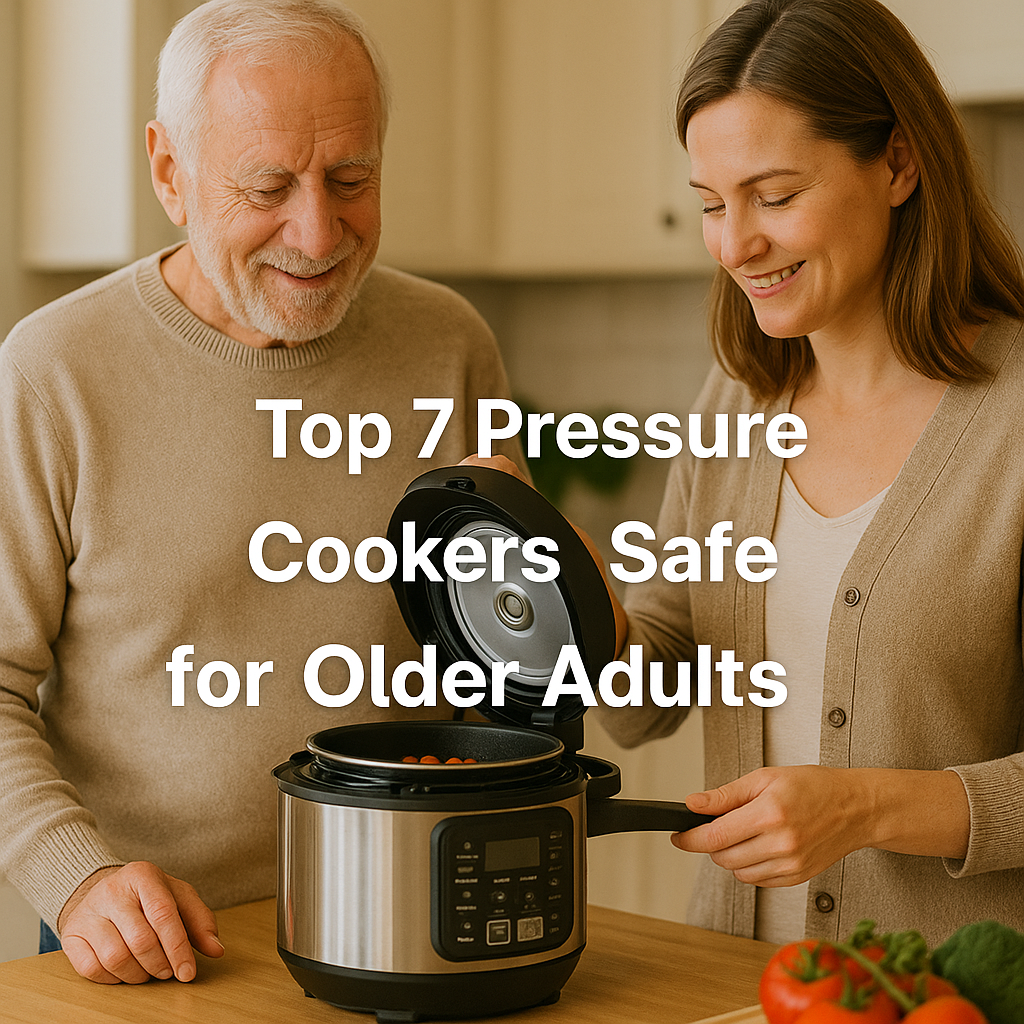
Cooking becomes more challenging as we age—lifting heavy pots, handling scalding steam, or navigating confusing controls can be risky for our aging parents. That’s why choosing a safe and user-friendly pressure cooker matters. These modern multi‑cookers come with sealed lids, one‑click settings, and gentle steam release—all designed to let seniors cook nutritious meals with ease, independence, and peace of mind.
Disclosure: This post contains Amazon affiliate links. If you purchase through these links, we may earn a commission at no extra cost to you.
📎 Comparison Table
| Product | Type | Key Features | Why It’s Senior‑Friendly | Amazon |
|---|---|---|---|---|
| Instant Pot Pro 6‑Qt 10‑in‑1 | Electric | 10 modes, safety lid-lock, quiet steam release | One-touch cooking, big handles | 🛒 Check Price on Amazon |
| Instant Pot Pro Plus Wi‑Fi 6‑Qt | Electric | Same as Pro + Wi‑Fi app control | Control from phone, smart alerts | 🛒 Check Price on Amazon |
| Instant Pot Duo Plus 6‑Qt 9‑in‑1 | Electric | 15 presets, locking lid, overheat protection | Trusted, simple interface | 🛒 Check Price on Amazon |
| Instant Pot Duo Crisp 6‑Qt | Electric | 11 functions + air-fryer lid | Very versatile, guided cooking | 🛒 Check Price on Amazon |
| Breville Fast Slow Pro 6‑Qt | Electric | Custom pressure, LCD, automatic release | Pro‑grade features, intuitive display | 🛒 Check Price on Amazon |
| Cosori 6‑Qt 9‑in‑1 | Electric | Quiet vents, simple presets | Budget-friendly, safe | 🛒 Check Price on Amazon |
| T‑fal Clipso 6.3‑Qt | Stovetop | Push-button lid, cool handles | Manual but robust and safe | 🛒 Check Price on Amazon |
🔍 Detailed Reviews
1. Instant Pot Pro 6‑Quart 10‑in‑1
Description: 10 smart cooking functions with whisper-quiet steam release and big ergonomic handles.
- Pros: Quiet, easy-to-use, perfect for arthritic hands.
- Cons: Slightly higher price tag.
- Ideal for: Seniors seeking premium safety and comfort.
2. Instant Pot Pro Plus Wi‑Fi 6‑Quart
Description: Adds mobile app controls to the Instant Pot Pro for remote monitoring.
- Pros: Smart control via phone, excellent safety features.
- Cons: Requires Wi-Fi setup.
- Ideal for: Tech-savvy seniors or families who help remotely.
3. Instant Pot Duo Plus 6‑Quart 9‑in‑1
Description: Classic pressure cooker with intuitive interface and essential safety tools.
- Pros: Affordable, easy presets, dependable brand.
- Cons: Not as modern-looking.
- Ideal for: Seniors who want ease of use with proven design.
4. Instant Pot Duo Crisp 6‑Quart
Description: Adds air-frying and dehydrating, ideal for health-conscious cooks.
- Pros: Air fry + pressure cook in one, safety release valve.
- Cons: Bulkier than standard models.
- Ideal for: Seniors who want all-in-one healthy cooking.
5. Breville Fast Slow Pro 6‑Quart
Description: High-end cooker with auto steam release and LCD that guides through each step.
- Pros: Auto pressure release, advanced safety, clear display.
- Cons: Higher price and heavier build.
- Ideal for: Seniors comfortable with slightly more complex tools.
6. Cosori 6‑Quart 9‑in‑1
Description: Simple, safe, and budget-friendly. Offers great value for seniors new to pressure cookers.
- Pros: Lightweight, affordable, stainless steel interior.
- Cons: Basic digital screen.
- Ideal for: Seniors on a budget looking for essential functions.
7. T‑fal Clipso 6.3‑Quart
Description: Stovetop option with one-hand lid and cool-touch handles—easy to manage even for older adults.
- Pros: Durable, dishwasher-safe, intuitive.
- Cons: Requires stovetop supervision.
- Ideal for: Seniors used to traditional stovetop cooking.
📚 How to Choose the Right Pressure Cooker for Seniors
- Opt for electric models with automatic pressure control and shutoff.
- Choose soft-lid locking and quiet steam release valves.
- Go for larger buttons and backlit displays.
- Pick lighter models or ones with removable inner pots.
- Look for built-in safety systems like overheat protection and lid lock indicators.
❓ FAQ
- Are pressure cookers safe for elderly users?
- Yes, especially electric ones with built-in pressure and heat regulation, locking lids, and auto shutoff.
- Is it hard for seniors to use pressure cookers?
- No. Many models are designed for simplicity with one-button controls and preset functions.
- What’s the best size for seniors?
- 6-quart models strike a great balance between capacity and weight for ease of use.
- What’s the quietest pressure cooker?
- Instant Pot Pro and Breville Fast Slow Pro feature gentle, whisper-quiet steam release.
- Can pressure cookers make food soft enough for dentures?
- Yes. They’re ideal for tender meats and stews for those with chewing issues.
Practice the Lid and Steam Steps Before Cooking
A pressure cooker can shorten a recipe, but its lid, sealing ring and steam-release mechanism add steps. Choose the interface the cook can read and understand, then practice closing the lid and locating the release valve on a cool, unplugged unit. A pressure program is not an independent safety guarantee. Always follow the exact model’s manual for fill limits, minimum liquid, release method and cleaning of the valve and seal.
Keep hands and face out of the steam path and allow pressure to release as directed before opening. Move hot cookware only when needed; the filled inner pot may be much heavier than the empty appliance. Someone who cannot confidently complete the lid and release sequence may be better served by a simpler cooker or a shared cooking routine.
Questions to Ask Before Choosing a Model
- Can the user read the status indicator from a normal standing or seated position?
- Can they remove, clean and refit the sealing ring and valve as the manual requires?
- Where will steam go during release, and is there a clear space above the appliance?
- Does the chosen model provide a written guide for the foods the household actually prepares?
Electric or Stovetop: Match the Cooker to the Routine
An electric pressure cooker is usually the easier format for a household that wants the appliance to manage heat after a program begins. It stays on the counter, so there is no heavy vessel to carry from sink to burner, and the cook does not need to adjust a flame while pressure builds. That convenience still involves setup, monitoring displays, and releasing pressure according to the manual. Consider whether the countertop location has a stable, uncluttered surface, a nearby outlet, and enough overhead clearance for steam.
A stovetop cooker may suit an experienced cook who prefers a familiar range and can remain attentive throughout cooking. However, its operation requires reaching over a hot burner, responding to changes in heat, and lifting the pot after cooking. A caregiver should not assume a push-button lid removes those demands. Choose this style only if the primary user can safely manage the stove controls, stay nearby, and handle the full pot or has reliable help for those steps. For many smaller households, a simpler covered saucepan may be more practical than either type.
Make Opening a Deliberate Final Step
Pressure cooking is not finished when the timer ends. The cooker must first be depressurized by the method specified for that recipe and appliance, whether that means waiting naturally or using its designated release control. The lid should remain closed until the pressure indicator shows it is safe to open under the manufacturer’s instructions. A cook who is eager to check food, distracted by a phone call, or unsure what the indicator means should pause rather than experiment with the lid.
Build a repeatable opening routine: turn off or finish the program, confirm the pressure signal has changed, stand clear of the release area, then open the lid in the direction described in the manual. Keep the opening motion slow because condensation can collect underneath. If eyesight makes the indicator difficult to interpret, a caregiver can label the relevant control area with a non-permanent, high-contrast reminder, without covering vents, warnings, or display information. Written steps kept in a kitchen drawer can reduce guesswork during a busy meal.
Plan the Steam Route and the Hot-Lid Landing Spot
Before choosing a permanent counter location, look above and around the cooker. Steam should not discharge beneath cabinets, shelving, wall decorations, or an outlet, and it should not point toward the cook’s usual standing position. Keep the appliance away from the edge of the counter, where a reaching arm might cross the steam route. Do not place a towel over the release area in an attempt to control vapor; it can interfere with the appliance’s intended operation and leaves a wet, hot item to handle.
The lid needs a landing place after opening. Set out a heat-resistant tray, plate, or clear section of counter before cooking begins, rather than carrying a dripping lid across the kitchen. Its underside may be hot, and steam can continue to escape from it. Avoid balancing the lid against the sink or placing it where a child, pet, or another household member may brush against it. If the kitchen lacks a clear, convenient place for both appliance and lid, a lower-complexity cooking method deserves consideration.
Choose Controls That Can Be Checked at a Glance
A crowded control panel can create errors even when its buttons are physically easy to press. In the store or after unpacking, assess whether the user can distinguish the start control, cancel control, pressure setting, timer display, and pressure-status cue in ordinary kitchen lighting. Glare from windows, dim evening light, and bifocal viewing angles can make a bright screen less useful than expected. Controls should be understandable without relying on tiny icons or a phone app that the primary cook does not regularly use.
Presets can be helpful when they correspond to meals the household actually makes, but they are not a substitute for reading a recipe and the manual. A bean setting, for example, does not tell the cook whether ingredients need soaking, how much liquid is required, or which release method is appropriate. Favor a cooker whose basic pressure-cook process can be explained in a few confident steps. If several modes are unlikely to be used, they add decisions rather than value and may make daily cooking feel intimidating.
Treat Fill Limits as Recipe Rules, Not Suggestions
The maximum fill line is only one part of capacity planning. Manuals often set lower limits for foods that foam, expand, or release starch, such as grains, pasta, dried beans, and some soups. Too much food can affect pressure control and can make cleanup more difficult. Before selecting a size, think about the household’s realistic portions rather than choosing the largest vessel available. A cooker that is frequently filled to its limit may be harder to stir, move, and serve from than one sized for a modest batch.
Keep the manual accessible and use its own measurements and instructions instead of transferring rules from another pressure cooker or an online recipe of uncertain origin. Recipes should include enough liquid for the selected appliance and leave room as directed. A caregiver helping with meal planning can mark a few suitable recipes and note the permitted fill level for each category of food. This is more useful than a general reminder because it links a familiar dinner, such as soup or pot roast, to the correct setup.
Include Seal and Valve Care in the Ownership Decision
A pressure cooker requires routine attention to parts that may be easy to overlook. The sealing ring, valve area, lid channels, and condensation components need cleaning and inspection on the schedule in that model’s instructions. Food residue, odor, wear, or a ring that no longer sits correctly are reasons to stop and consult the manual before cooking. The task is not difficult for every user, but it can be frustrating for someone with limited hand strength, reduced vision, or difficulty handling small removable pieces.
Before committing to a cooker, have the intended user or caregiver look at how the lid parts come apart and go back together. Ask who will wash them, where replacement instructions will be kept, and whether the household can tell when a component is missing. Avoid improvising with damaged parts or forcing a valve that does not move as expected. A device that depends on maintenance no one is comfortable performing can become an unused countertop burden, regardless of how appealing its cooking functions appear.
Reduce Strain When Moving, Serving, and Cleaning
The removable cooking insert can become awkwardly heavy once it contains broth, vegetables, or meat. Plan to cook near the place where food will be served, and use a ladle or smaller utensil to transfer portions rather than lifting a full insert across the kitchen. If the insert has no comfortable grip when hot, wait until it has cooled as instructed before moving it. Countertop height matters too: a cooker positioned too high requires shoulder-level lifting, while one placed too low may demand uncomfortable bending.
Cleaning should be evaluated as part of everyday usability, not as an afterthought. A deep insert may be difficult to wash in a small sink, and a heavy base should never be immersed unless its instructions explicitly allow it. Let components cool before washing, then keep the cord and electrical base dry. For a caregiver, a useful division of tasks may be letting the older adult choose ingredients and start a familiar program while another person handles lifting, sink washing, and reassembling parts that require close visual inspection.
Use a Water-Only Practice Session With a Caregiver
A first session does not need to involve an important meal. With the manual open, a caregiver and user can complete a water-only practice run using the amount and procedure the manufacturer specifies. This allows them to identify the lid orientation, locate the pressure indicator, read the display, and observe where vapor travels without the added distraction of ingredients or cleanup. The caregiver should demonstrate from a safe position, then let the user describe each step and perform only the steps they are comfortable handling.
Practice should reveal limitations, not conceal them. If the user cannot see the status signal, remember the release sequence, secure the lid without force, or reach the controls without leaning across the appliance, do not treat repeated practice as the only answer. Adjusting the counter placement, improving lighting, or assigning a caregiver to particular steps may help. If those changes do not create a comfortable routine, select another cooking approach. Independence is better supported by a manageable task than by a complicated appliance used reluctantly.
A Practical Buyer Checklist Before Bringing One Home
Use this checklist with the intended cook: Is there a stable storage and operating spot? Can the display, status cues, and key controls be read from the user’s normal position? Is there a clear route for steam and a safe place for the lid? Can the user lift the empty insert, and can cooked food be served without lifting a full pot? Will the household consult the manual’s fill limits and maintenance directions? Clear answers matter more than having the greatest number of cooking modes.
Also decide what happens on days when energy, concentration, or hand comfort is lower than usual. A pressure cooker should not be the only way to prepare dinner. Keep alternative options available, such as a microwave meal, soup warmed in a light saucepan, or a slow-cooker recipe managed with help. Choose a simpler device when the pressure-cooking sequence creates hesitation, when cleaning parts would be neglected, or when dependable supervision is not available. The best kitchen tool is one that fits the person’s actual routine consistently.
Fit Pressure Cooking Into the Meal Schedule
Pressure cooking can shorten cooking, but it does not make every dinner immediate. Ingredients need measuring, the vessel needs time to reach pressure, and some meals benefit from a standing period before serving. Consider whether the household starts dinner predictably or responds to hunger at the last minute. For irregular schedules, keep non-pressure meals available. This prevents a rushed setup when someone is tired, waiting for transportation, or needs food sooner than the appliance allows.
Choose recipes with steps completed before the appliance is switched on. Chopping, opening packages, locating seasonings, and setting out a serving utensil are easier without a hot cooker nearby. A meal card can list preparation separately from cooker steps, helping a caregiver see where assistance is useful. Avoid an unfamiliar recipe when visitors, deliveries, or appointments may interrupt it. Repeating a small group of reliable meals builds a calmer routine than trying to adapt complicated dishes.
Set Up a Clear Handoff for Shared Kitchens
In a shared kitchen, decide who may pause or take over cooking. That agreement prevents confusion if the primary cook steps away, becomes uncertain, or answers the door. Keep responsibilities simple: one person may prepare ingredients, another may operate the appliance, and another may serve. Household members should not press buttons, move the cooker, or remove parts merely because they hear a beep. A check before anyone leaves helps avoid assumptions about dinner supervision that evening.
Agree on what to do if the cooker displays an unfamiliar message, stops unexpectedly, or a part cannot be located. The safest household rule is to stop the session, turn to the manufacturer’s instructions, and use another meal plan if uncertainty remains. Do not let embarrassment encourage someone to guess in front of family. A designated contact person can help, but should not troubleshoot by phone while it operates nearby.
Further reading: U.S. Fire Administration: cooking safety FoodSafety.gov: four steps to food safety.
🎯 Conclusion
If you’re thinking about your aging parents, a safe pressure cooker can be life-changing. Whether it’s the advanced Instant Pot Pro, the tech-friendly Pro Plus, or the value-packed Cosori, there’s a safe option for every budget and kitchen.
See more guides: Best Blenders for Seniors | Easy Kitchen Tools for Older Adults