
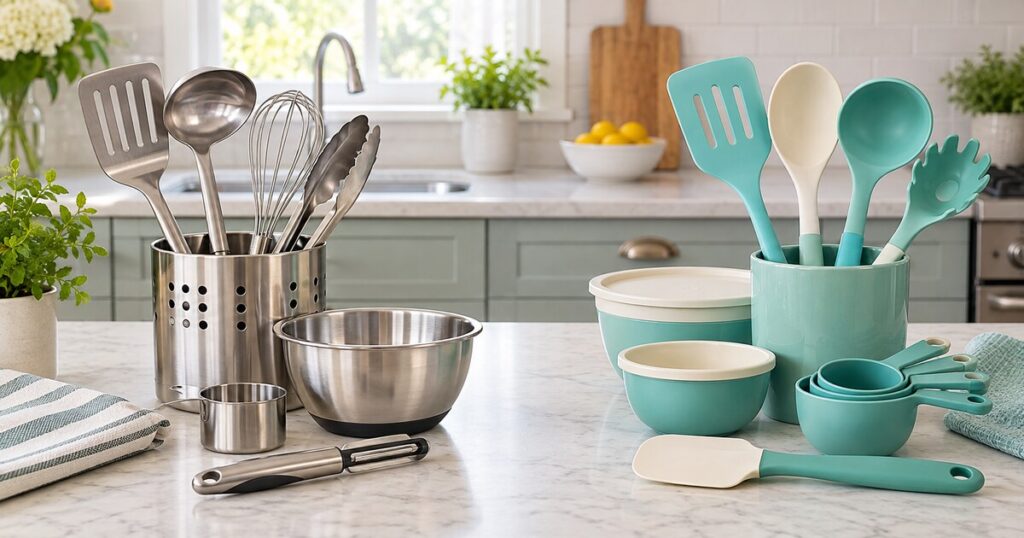
Choosing between stainless steel and plastic kitchen tools is not simply a question of which material lasts longer. For seniors, the better choice also depends on weight, grip strength, hand pain, vision, balance, cleaning habits, and the type of cooking being done. Stainless steel is usually more durable and heat-resistant, while plastic can be lighter, quieter, and easier to lift. In many senior-friendly kitchens, a thoughtful mix of both materials works better than using only one.
Quick answer: which material is better for seniors?
Stainless steel is usually better for durability, stability, and high-heat tasks. It is a strong choice for mixing bowls with non-slip bases, strainers, measuring spoons, and tools that need to resist bending or staining.
Plastic is often better when low weight and a softer feel matter most. Lightweight measuring cups, storage containers, cutting boards, and handled utensils may be easier for seniors with arthritis, reduced grip strength, or fatigue.
The safest choice is not based on age alone. Select each tool according to the person’s abilities and the task. A lightweight tool that slips is not safe, and a durable tool that is too heavy to control is not practical.
| Factor | Stainless steel | Plastic |
|---|---|---|
| Weight | Usually heavier | Usually lighter |
| Durability | Resists cracking and bending | Can crack, warp, or become scratched |
| Heat resistance | Suitable for many hot-food tasks | Depends on the product and temperature rating |
| Grip comfort | May feel hard, cold, or slippery | Can provide thicker, softer handles |
| Visibility | Reflective surfaces may create glare | High-contrast colors can be easier to see |
| Cleaning | Nonporous and generally easy to clean | Lightweight, but scratches can trap residue |
Advantages of stainless steel kitchen tools
Long service life
Good stainless steel tools do not crack like brittle plastic and are less likely to bend during normal use. That durability can make familiar tools more predictable, which is useful for seniors who prefer a consistent kitchen setup.
Stability during preparation
The extra weight of a stainless steel bowl or colander can help it stay in place. For better control, look for a wide base, a non-slip ring, and comfortable side handles. Weight becomes a disadvantage when the item must be lifted while full, so test the complete lifting motion rather than judging an empty bowl.
Heat and stain resistance
Stainless steel is appropriate for many hot-food tasks and does not absorb colors or odors easily. It can be a practical choice for ladles, tongs, strainers, and mixing tools. Metal handles may become hot near a burner, so long handles and insulated grips are important.
Points to watch
- Thin or polished handles can be difficult to hold with painful or weak hands.
- Reflective metal may create glare for someone with low vision.
- A dropped metal tool is noisy and can be startling.
- Large stainless steel cookware may become too heavy once food or water is added.
Advantages of plastic kitchen tools
Lower lifting effort
Plastic bowls, measuring cups, boards, and containers are generally lighter. This can reduce strain on the hands, wrists, elbows, and shoulders. A lightweight item should still have a non-slip base or textured grip so it does not move unexpectedly.
Comfortable shapes and colors
Plastic is easy to form into thick handles, finger rests, and high-contrast shapes. These features may help seniors with arthritis, tremor, reduced sensation, or limited vision. Color coding can also make commonly used tools easier to identify.
Quieter handling
Plastic tools make less noise when placed on a counter or dropped. They may also feel less cold than bare metal. These small comfort factors can matter when a senior is sensitive to sound or temperature.
Points to watch
- Replace items that are cracked, deeply scratched, warped, sticky, or difficult to clean.
- Use each item only within the manufacturer’s temperature guidance.
- Do not place ordinary plastic near an open flame or hot heating element.
- Choose food-contact products from established manufacturers and follow their care instructions.
Best material for common kitchen tools
Mixing bowls and colanders
Choose stainless steel when a stable, durable bowl is helpful, especially if it has a non-slip base. Choose plastic when lifting weight is the main concern. Side handles are often more important than the material itself.
Measuring cups and spoons
Lightweight plastic sets with large, high-contrast markings can be easier to read and handle. Stainless steel sets last longer, but engraved measurements may be hard to see. Look for wide handles and markings that remain legible after washing.
Cooking utensils
Stainless steel is strong and heat-resistant but can scratch some cookware and may conduct heat through the handle. Plastic utensils are lighter, but their heat limits vary. Silicone-tipped tools with thick, non-slip handles are another useful option when comfort and cookware protection are priorities.
Cutting boards
A lightweight plastic board is easier to move and can be cleaned thoroughly, but it must not slide. Add a damp cloth or non-slip mat underneath. Replace a board with deep grooves that are difficult to clean. A board with a raised edge can help contain food and liquid.
Food-storage containers
Plastic containers are light, but lids may require pinching or force. Look for large tabs, easy-lock designs, and clear visual alignment. Stainless steel containers are durable but opaque, so labels may be needed to identify contents.
Accessibility matters more than material
Before buying or keeping a kitchen tool, evaluate how it works in the senior’s hand. The following checklist is more useful than choosing stainless steel or plastic by itself:
- Grip: Is the handle thick, textured, and comfortable without tight squeezing?
- Weight: Can the item be lifted and controlled when it contains food or water?
- Stability: Does it have a wide base, non-slip feet, or a non-slip mat?
- Visibility: Are the edges, controls, and measurement markings easy to see?
- Reach: Can it be used without excessive bending, stretching, or twisting?
- Cleaning: Can it be washed safely without complicated disassembly?
- Condition: Are there sharp edges, loose handles, cracks, or warped surfaces?
A practical mixed setup for a senior-friendly kitchen
A balanced setup might include lightweight plastic measuring cups and storage containers, a stable stainless steel mixing bowl with a non-slip base, stainless steel tongs with cushioned handles, and a non-slip plastic cutting board. This approach uses the strength of each material while avoiding an all-or-nothing choice.
Keep frequently used tools at waist-to-shoulder height, store heavier items on a stable shelf, and avoid overfilling containers. If grip strength or balance is changing, reassess the tools regularly. The Senior Kitchen Safety Checklist provides additional ideas for organizing a safer workspace.
Final verdict
Neither stainless steel nor plastic is automatically best for every senior. Stainless steel is the stronger option for durability, stability, and many high-heat tasks. Plastic is often the more comfortable option when low weight, quiet handling, and high-contrast design are important. For most older adults, the best answer is a carefully selected combination: lightweight where lifting is difficult, stable where spills are a concern, and easy to grip in every case.